For today’s Rhapsody we have Hibernian Rhapsody… Which is an instrumental variation of Bohemian Rhapsody by Irish folk band De Dannan. But still nice.
Comments Off on Tuesday Rhapsodies – De Dannan






For today’s Rhapsody we have Hibernian Rhapsody… Which is an instrumental variation of Bohemian Rhapsody by Irish folk band De Dannan. But still nice.
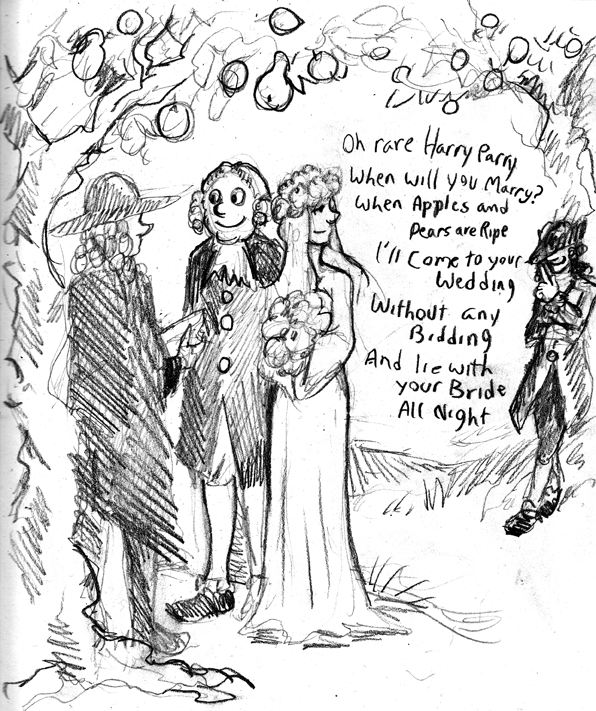
Well with the ninth rhyme in this sketch challenge, Oh Rare Harry Parry, we come to yet another one I’ve never heard of, and another that asks the question, “were these ever meant for kids?” wiith the subject being what could either be Noblesse oblige or just basic cuckoldry… I went with the cuckoldry.
The annotation claims that later version change the final verse to “and dance and sing all night”… gee I wonder why.
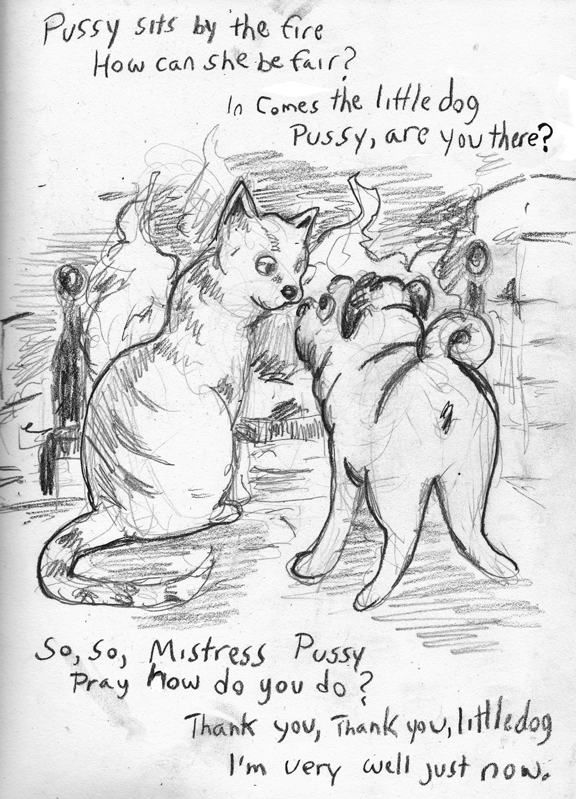
Well I just started my new sketchbook with “Pussy Sit’s by the Fire” and I am feeling nicely smug. This is definitely my best one yet, and considering I said that yesterday this is a good sign for the rest of the challenge.
In honesty’s sake I have to admit I cheated, the first two numbers I drew were more rhymes about months and weather and frankly I was tired and didn’t want to start the new sketch book with puzzling over abstract concepts and make a mess.
This interested me in a linguistic sense wondering about how pronunciation changed over the centuries from a time “now” and “do” rhymed.
Wow, after a week of this we come to the first rhyme I’ve heard of, Tweedledum & Tweedledee… As a fan of Lewis Carroll and John Tenniel I know them well, to the point that it’s easy to forget the rhyme and believe that Carrol made them up.
But for the sake of this exercise we have to forget about the pair of fat twins Tenniel created for that matter it’s best to forget Through the Looking-Glass and what Alice Found There all together. So while I’ll continue to assume they are comical figures nobody said they were twins. I went with boxing as my option for the “battle” (though when you think about it nobody said the battle ever took place) because theres something about someone out of shape in boxing gear that comes off as ridiculous to me.
Again I caught myself misreading a verse with assuming “big” as a tar barrel rather then “black”… of course since it’s a crow it’s black by default.
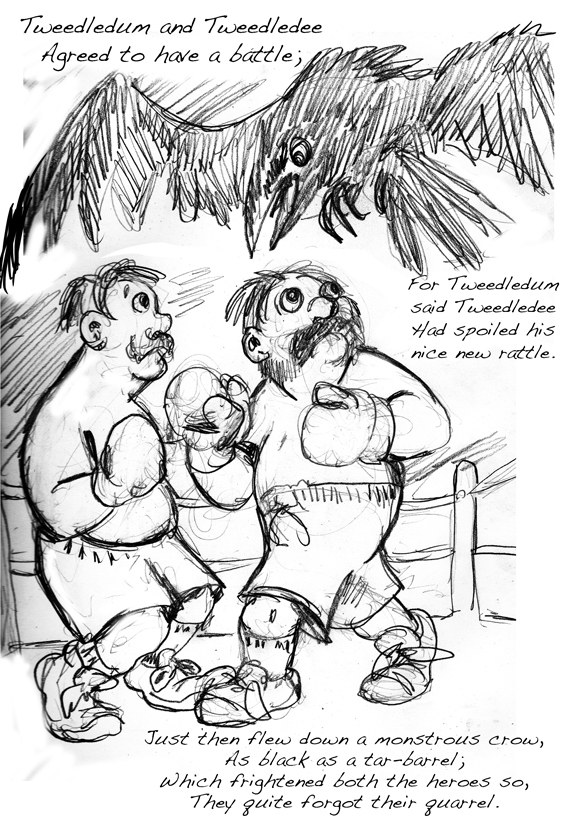
Tweedledum and Tweedledee Agreed to have a battle; For Tweedledum said Tweedledee Had spoiled his nice new rattle. Just then flew down a monstrous crow, As black as a tar-barrel; Which frightened both the heroes so, They quite forgot their quarre
With this one, “Winter’s Thunder” I’ve had two nature rhymes in a row… I think this one came out a lot better though it’s kind of hard to do a oncoming thunderstorm with a pencil… monochrome really doesn’t do them justice (no shades of purple)
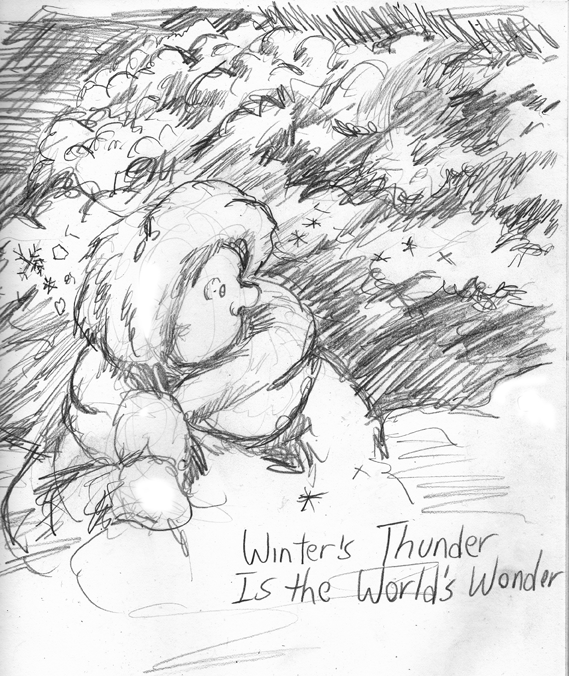
Winter’s Thunder
Is the World’s Wonder
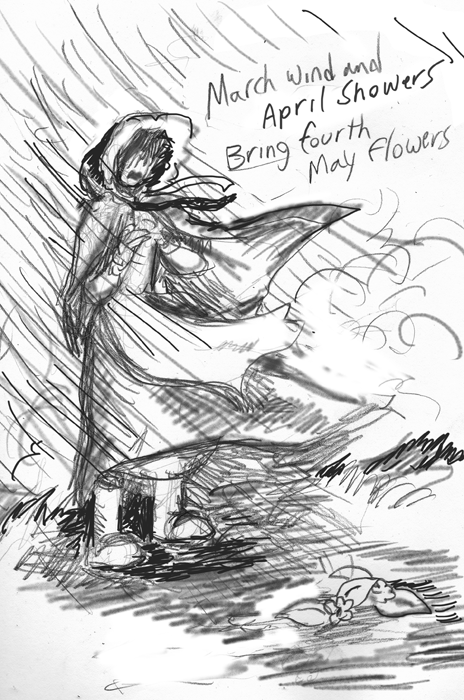
I have a bad feeling that this one, March wind and April Showers is the first dud of the batch. I blame being a very simple image which I rushed on making a huge mess.