Once again we arrive on May 4th, the anniversary of the day Alice dreamed the events of Alice in Wonderland. For all the reasons I believe this go here.
To celebrate here’s the tea party scene from Dreamgirl.
These two films were suggested to me by a friend, and for a while I wasn’t sure what they had in common and then it hit me, marital bliss. Admittedly with one of these films I’m being very sarcastic when I say that.
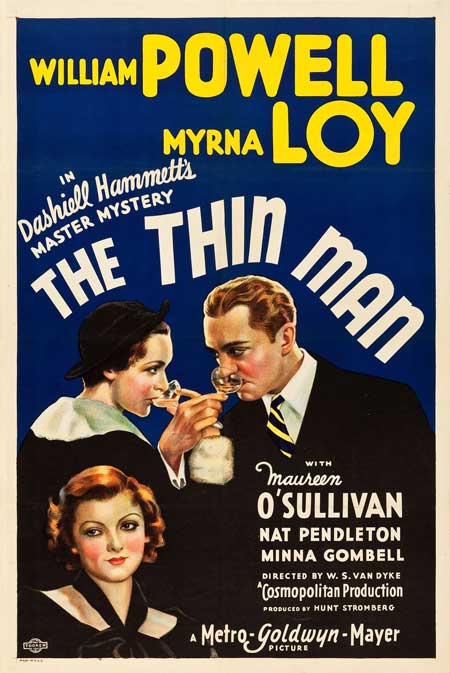
My first film, The Thin Man, was one of these films that I had known about as one of the classics for ages, but had never gotten around to seeing it.
The Thin Man is a classic by the numbers murder mystery including a closed room finale (though it has the nice twist of all of the players being frogmarched in by the police)
What makes this film great our our witty, hard drinking couple Nick and Nora Charles, played wonderfully by William Powell and Myrna Loy(and their dog Asta played by Skippy) Having only known about the married couple as heroes I had first thought Nick and Nora were the young idealistic couple we were introduced to in the very beginning of the film and was pleasantly surprised it was the older eccentric socialites we meet fifteen minutes in.
Power and Loy have great chemistry and make Nick and Nora a very believable as a couple and equal partnership. And that what makes it interesting is that such a partnership is even considered in this era and how well it works.
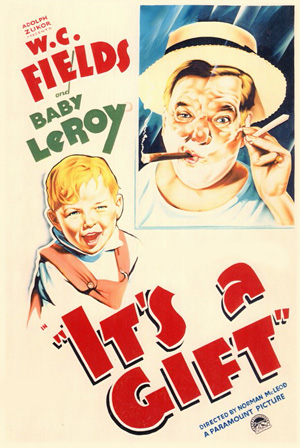
In It’s A Gift we go the opposite way. W. C. Fields goes though domestic hell which includes an obnoxious sun, a loving but oblivious daughter and a shrill overbearing wife played with wonderful over the tap self importance by Kathleen Howard.
Beyond this it’s like every thing in the world is out to get him from annoying neighbors to idiotic employees and that’s not getting into what fate has planned.
Most of the story is just a means to link together a string of brilliant slapstick routines but somehow it transcends this with wonderfully poignant overtones. Despite everything Fields wants to do right by his family. Despite everything that happens.
I also found it fascinating of how it presented a carraccature of the era. I’d frequently suspected that the comical stereotype of the nagging wife was an exaggeration and even it wasn’t what other weapons did a woman have at her disposal during that period. Either way Howard brilliantly plays the ultimate exaggeration of this stock character always assuming the worst from her husband and completely misunderstanding any situation be it someone calling with the wrong number at the middle of the night or her husband speaking to other women (yelling at the neighbors)
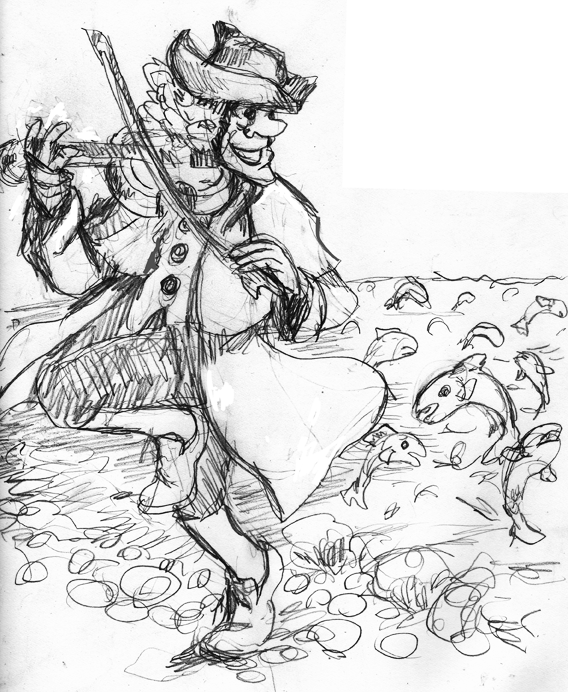
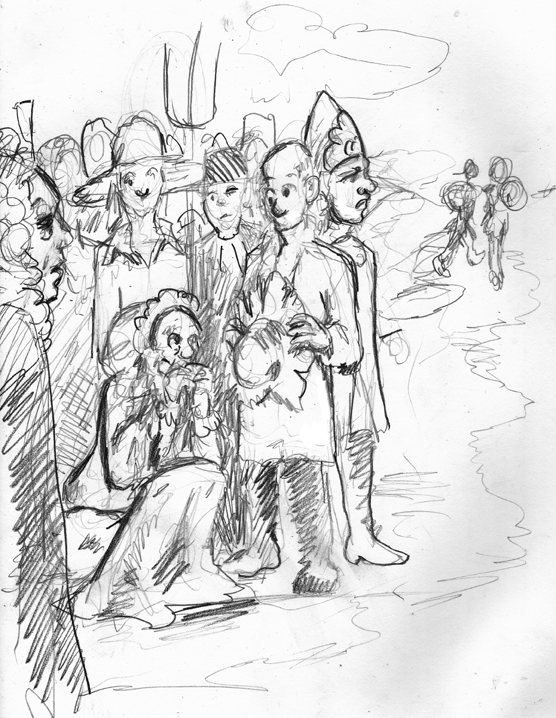
Maybe i’m finally getting into my grove on this thing, or maybe it’s just a fiddler performing to fish is an easier image to visualize than a gunner or an old lady silently crying.
For some reason while I was drawing this I misremembered “three-stringed” as “three-fingered”.
Terence McDiddler, The three-stringed fiddler, Can charm, if you please, The fish from the seas.
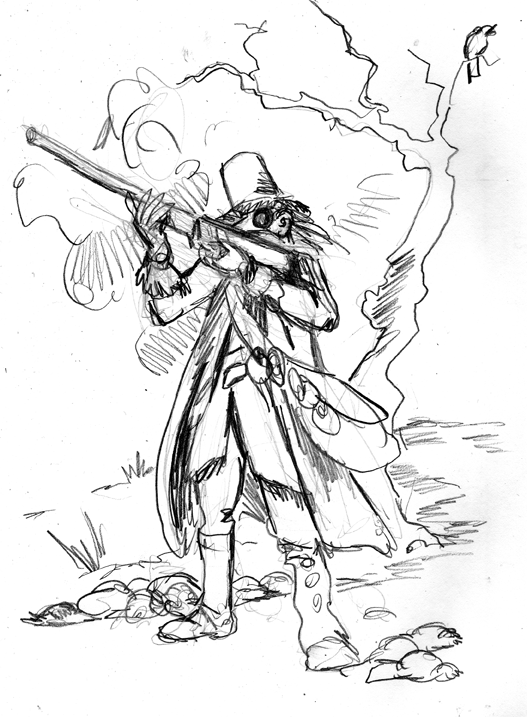
Well today’s poem was two lines about a gunner and is showing me how much of an uphill slog I’m looking at. When I looked at the two lines I had to ask first doesn’t that second line kind of redundant, and “does gunner mean man with gun or was it something more specific in the 17th century?”
To make matters worse, peacenik that I am, I had to spend five minutes going through visual references to see use how anyone even holds a rifle.
There was a little one-eyed gunner Who killed all the birds that died last summer.
Well with spring definitely here I decided to inflict another sketch challenge on myself , the theme this time, nursery rhymes!
Now hear me out it’s a lot cooler than it sounds! I happen to own a copy of The Annotated Mother Goose, along with a lot of these serving as commentary for the periods they took place you get a good feeling that a lot of them spent quite a bit of time being sung in bars before they got cleaned up a lot and found their way into a children’s nursery. Most of them are abstract as hell and whatever context they had disappeared centuries ago…. this makes them a CHALLENGE.
Better yet, they’re all listed by number which made it easy to do a random list to throw into the magic tupperware container. This makes this challenge I’ve done yet. I haven’t the slightest idea what I’m going to pull. There is no concept in the container I’m aware of to even look forward to doing! This makes me so pumped I’ve made this my first two month challenge!
So I am taking the first number from the magic tupperware container and getting number 110! Which is…
There was an old woman had nothing. And there came thieves to rob her, When she cried out she made no noise, But all the country heard her.
Okay. Maybe this wasn’t my best idea.
There was an old woman had nothing. And there came thieves to rob her, When she cried out she made no noise, But all the country heard her.
A very happy 117th birthday to Mr. Duke Ellington, so let’s celebrate by listen to him perform “Sophisticated Lady” with a little bit of help from his orchestra and saxophonist Harry Carney.